|
Qijian Tian I'm a fourth-year Ph.D. student in Computer Science and Technology at Shanghai Jiao Tong University (SJTU), advised by Prof. Lizhuang Ma at the Digital Media & Computer Vision Laboratory (DMCV), with additional supervision from Dr. Xin Tan. Before my Ph.D., I received my bachelor's degree in Computer Science and Technology from Beihang University (BUAA). I also worked as an intern at Shanghai AI Laboratory and Baidu. |

|
ResearchMy research interests involve multimodal large language models (MLLM / VLM) and 3D vision. I'm currently interested in VLM post-training and agentic RL, particularly in advancing the capabilities of foundation models for Computer-use Agents & Design Artifacts. I have previously conducted some work in 2D/3D scene understanding, especially in scene parsing and 3D Gaussian splatting. |
Report |
|
|
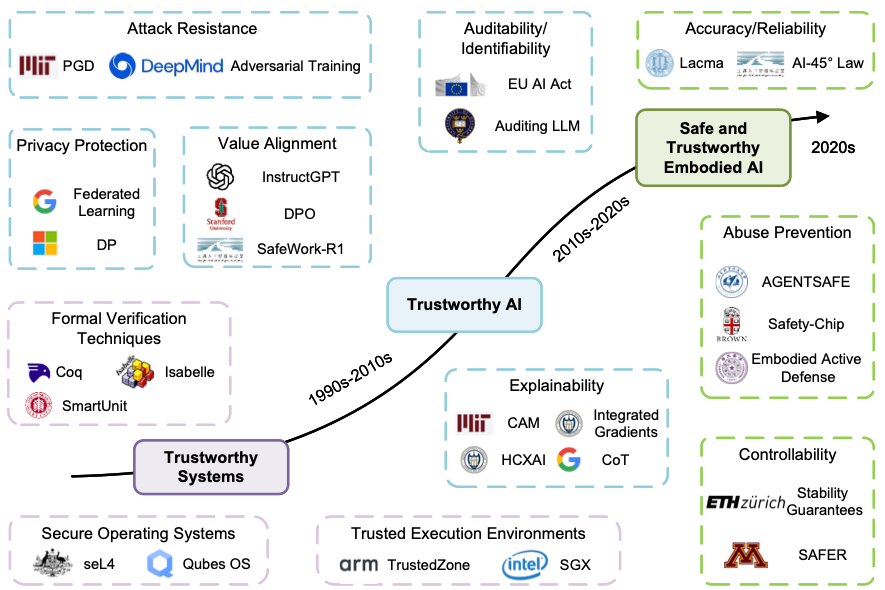
Towards Safe and Trustworthy Embodied AI: Foundations, Status, and Prospects
Shanghai AI Laboratory Technical Report 2025 project page / openreview A framework for safe and trustworthy embodied AI, defining five levels and ten core principles, analyzing risks across the agent's operational stages, and outlining a roadmap toward safety across the closed-loop interaction between agents and their environments. |
Paper |
|
|
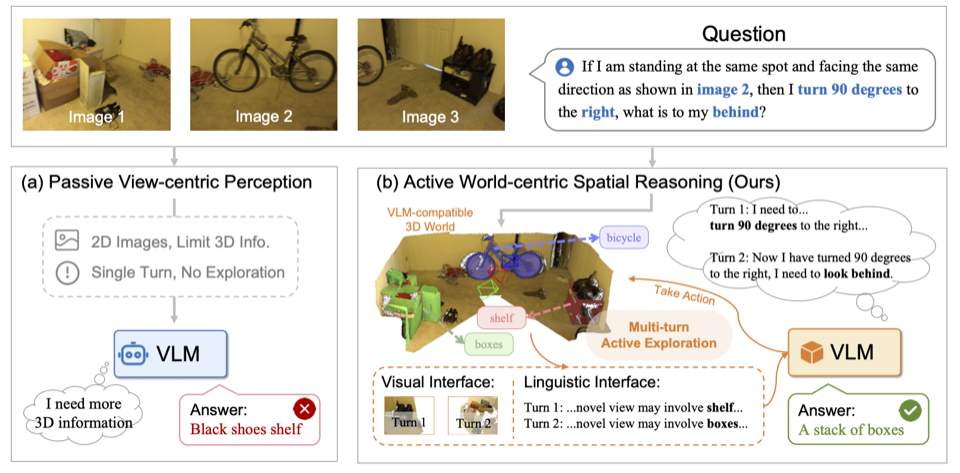
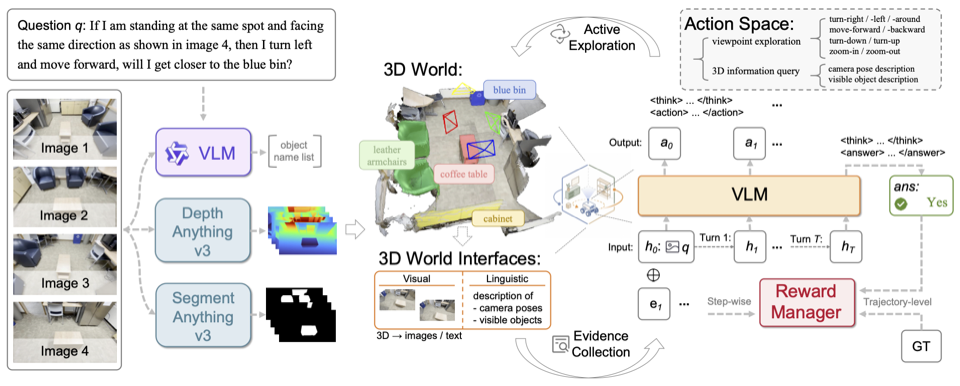
From Views to Worlds: Active Exploration over 3D Worlds for Vision-Language Models
NeurIPS 2026
project page /
arXiv
An active exploration framework that enables VLMs to actively explore 3D worlds and lifts VLMs from passive view-centric perception to active world-centric spatial reasoning. |
|
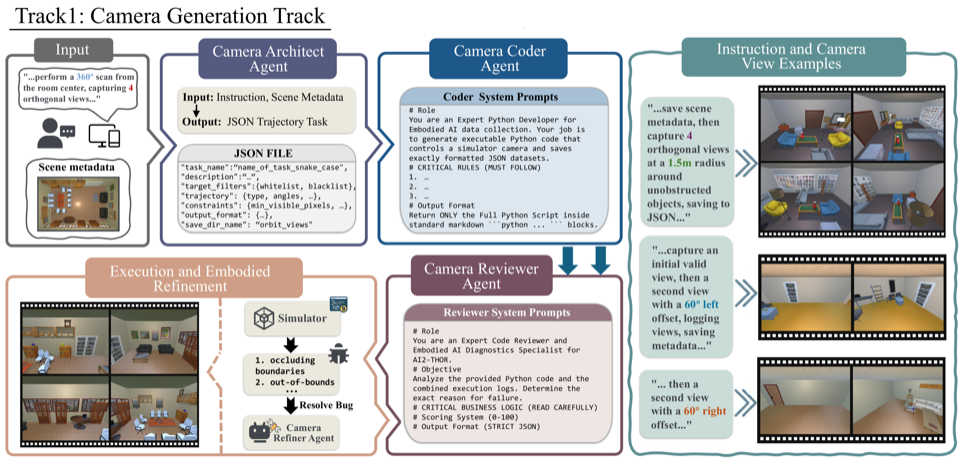
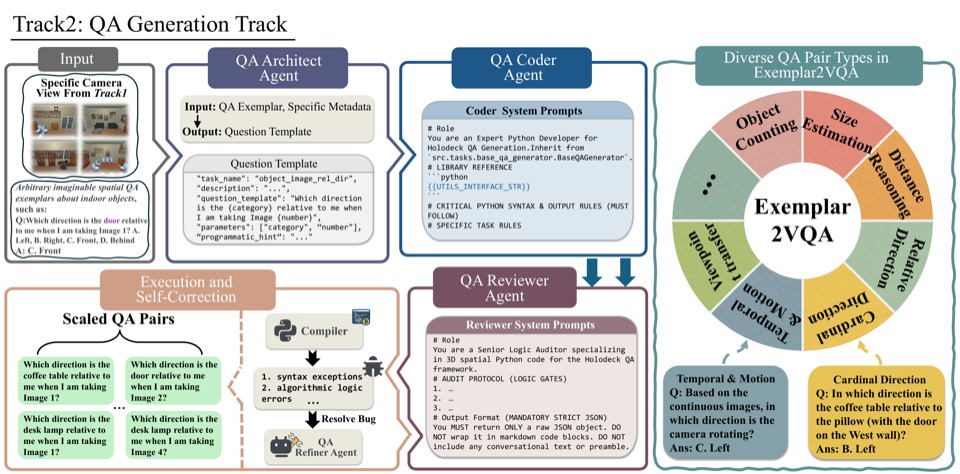
Exemplar2VQA: A Scalable Exemplar-Driven Visual Question Answering Generation Framework via Multi-Agent Coding
NeurIPS 2026
project page /
arXiv
An exemplar-driven framework that uses collaborative coding agents and geometric utilities to generate spatial question-answer pairs at scale in simulated 3D environments, improving VLMs' spatial reasoning through synthetic training data. |
|
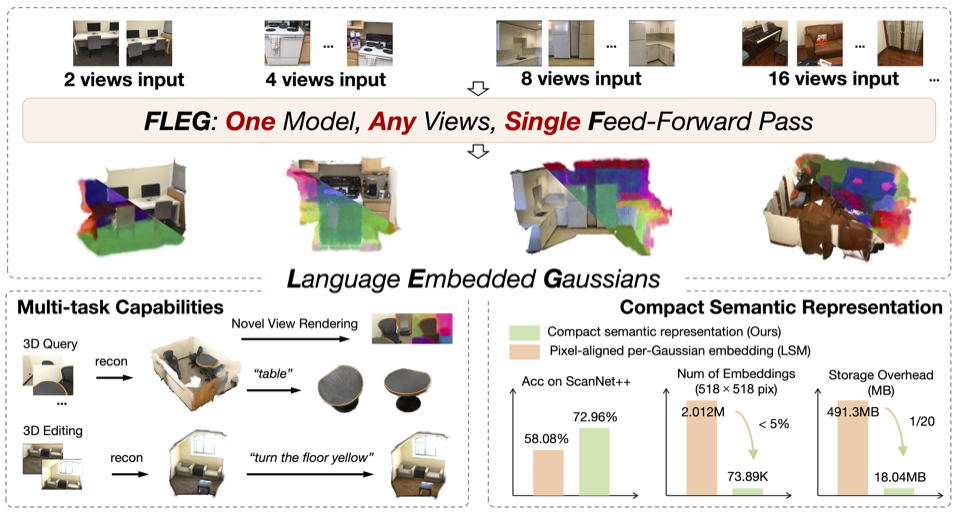
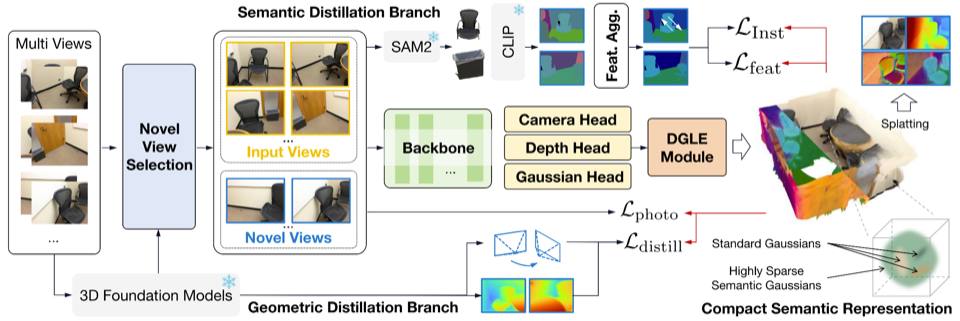
FLEG: Feed-Forward Language Embedded Gaussian Splatting from Any Views via Compact Semantic Representation
ECCV 2026
project page /
arXiv
A feed-forward network that reconstructs language-embedded 3D Gaussians from arbitrary uncalibrated and unposed images with a compact semantic representation that avoids per-Gaussian language embedding and significantly reduces storage overhead. |
|
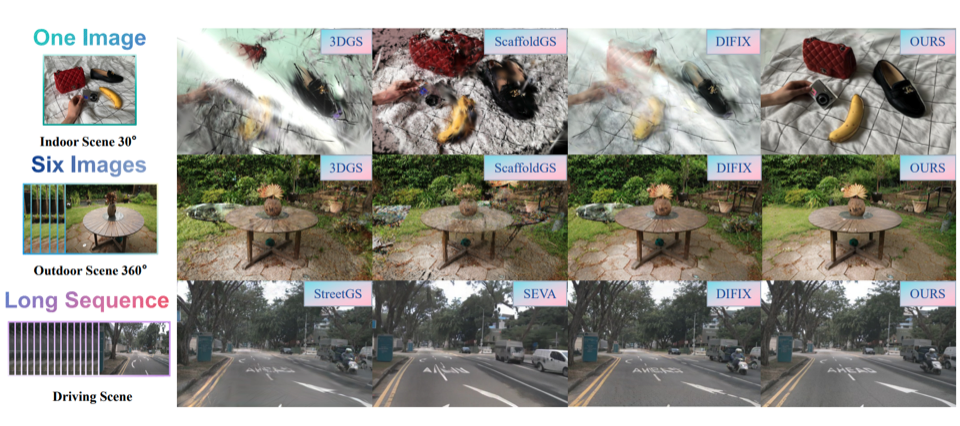
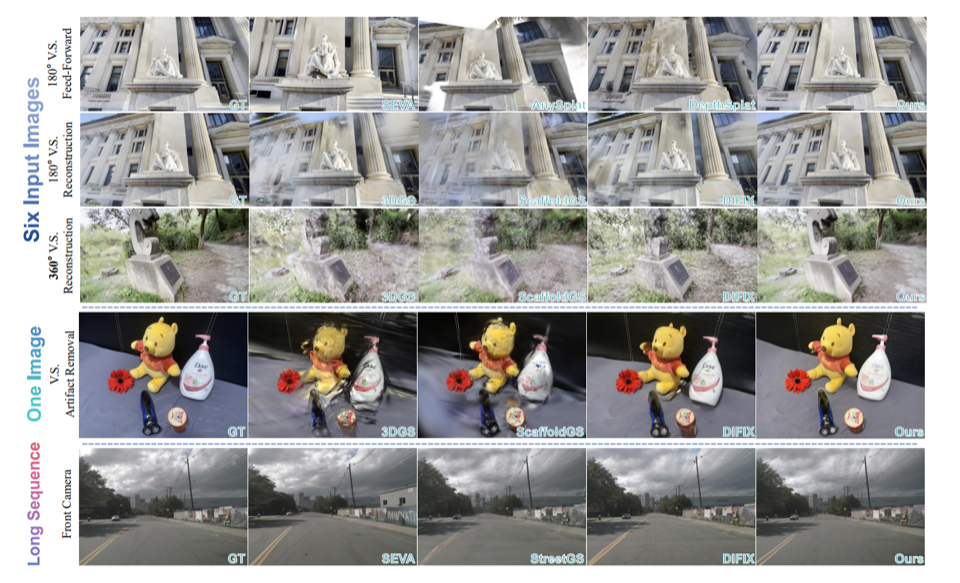
S2D: Sparse to Dense Lifting for 3D Reconstruction with Minimal Inputs
CVPR 2026
project page /
arXiv
A sparse-to-dense lifting pipeline that bridges point clouds and 3D Gaussian Splatting via a one-step diffusion model, enabling high-quality 3DGS reconstruction with minimal inputs. |

|
DrivingForward: Feed-forward 3D Gaussian Splatting for Driving Scene Reconstruction from Flexible Surround-view Input
AAAI 2025
project page /
arXiv
A feed-forward Gaussian Splatting model that reconstructs driving scenes from flexible sparse surround-view input. |
|
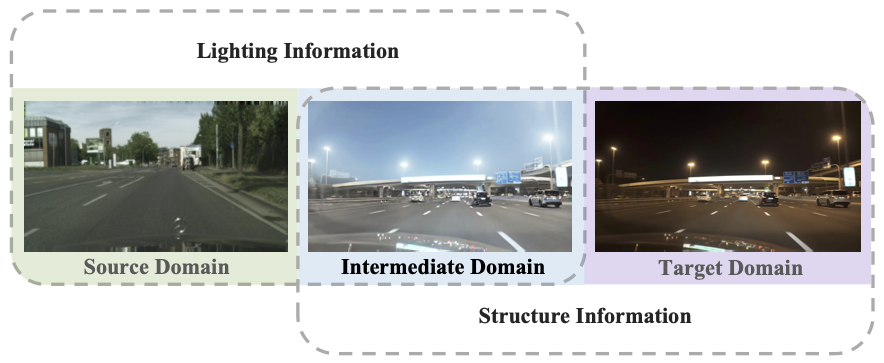
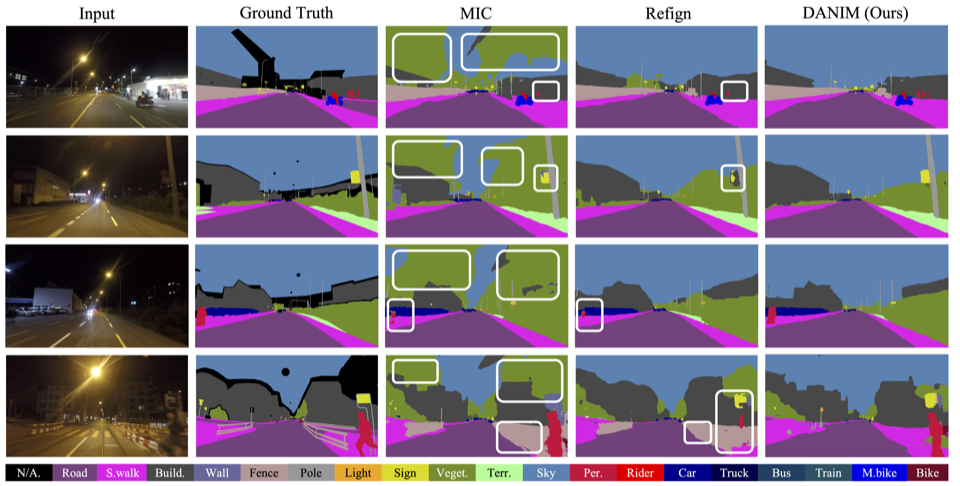
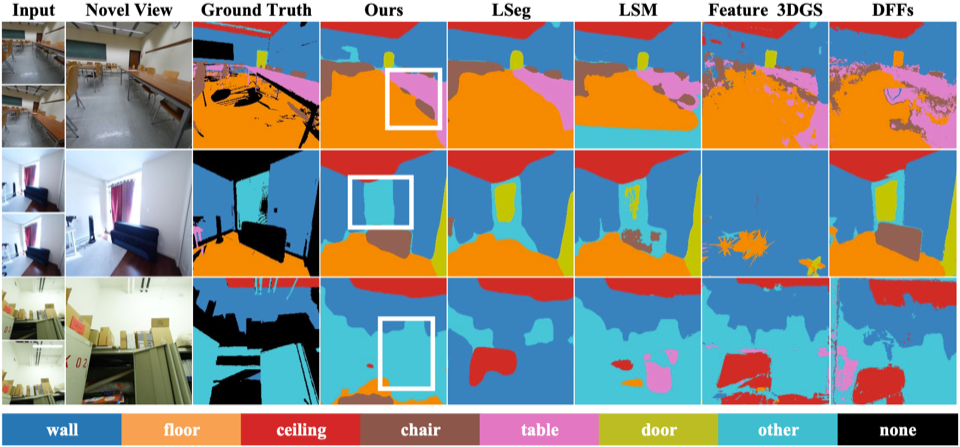
DANIM: Domain Adaptation Network with Intermediate Domain Masking for Night-time Scene Parsing
Pattern Recognition 2026
A novel domain adaptation network for night-time scene parsing that bridges the day-night domain gap using an intermediate domain. |
|
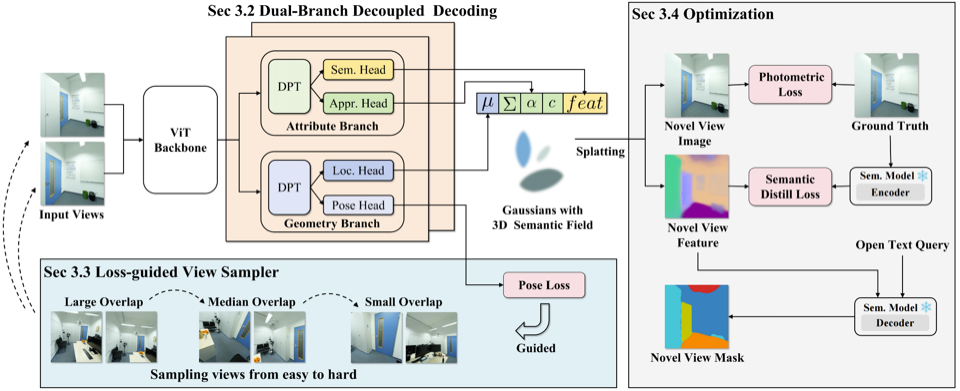
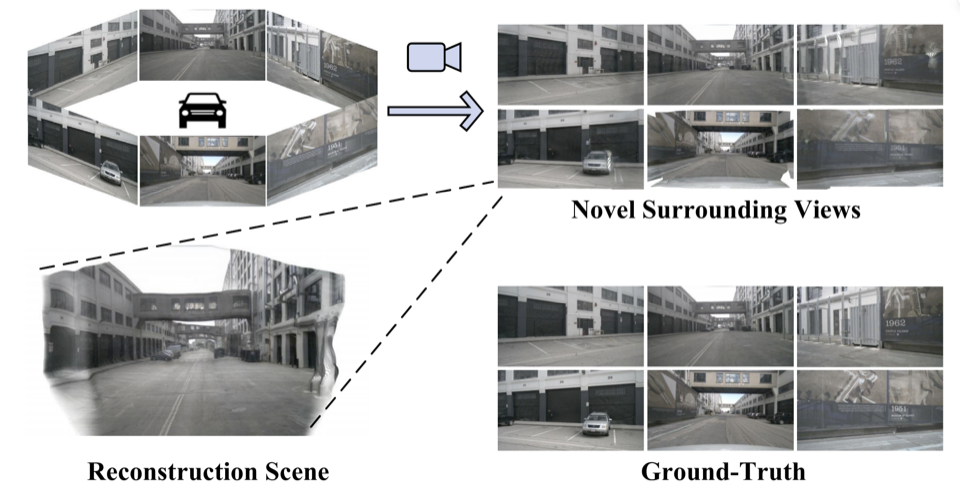
UniForward: Unified 3D Scene and Semantic Field Reconstruction via Feed-Forward Gaussian Splatting from Only Sparse-View Images
Virtual Reality & Intelligent Hardware 2026
arXiv
A feed-forward Gaussian splatting model that jointly reconstructs 3D scenes and semantic fields from sparse, uncalibrated and unposed images, enabling real-time rendering and open-vocabulary segmentation. |
|
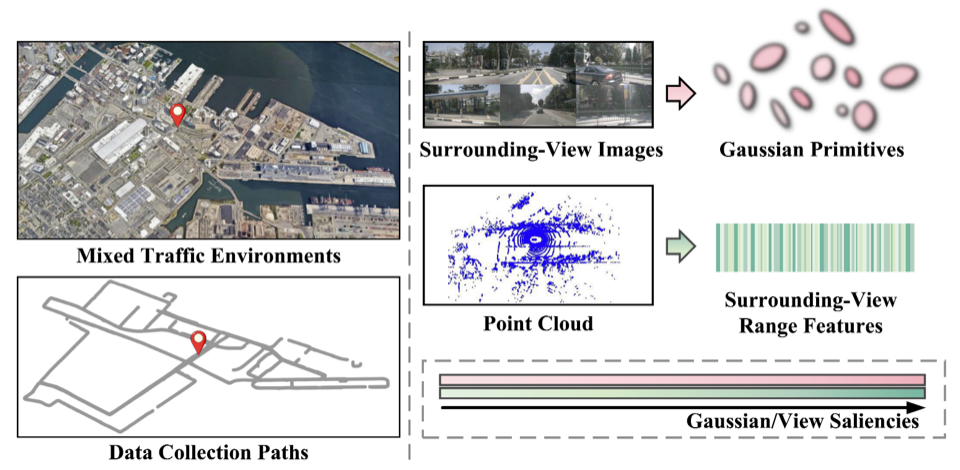
Multimodal Place Recognition With Feed-Forward Gaussian and Mamba-Based Enhancement in Mixed Traffic Environments
IEEE Transactions on Intelligent Transportation Systems 2026
A multimodal place recognition framework that combines feed-forward Gaussian representations with Mamba-based enhancement for mixed traffic environments. |
|
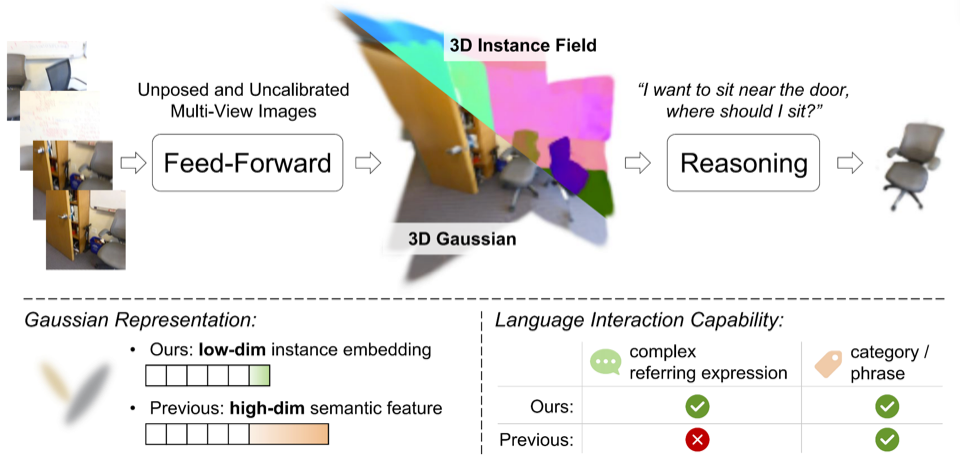
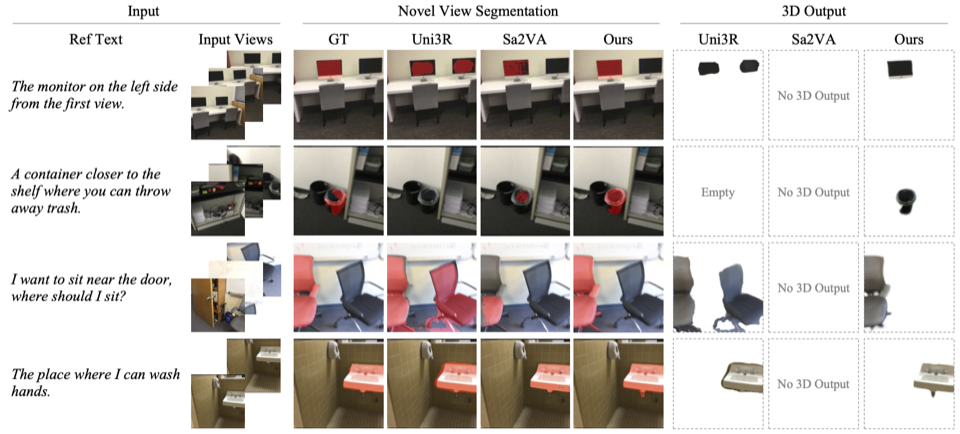
GroupForward: Building Referable 3D Scenes via Instance-Grouped Feed-Forward Gaussian Splatting
arXiv 2026
arXiv
A feed-forward Gaussian splatting model that reconstructs instance-grouped 3D scenes from sparse, unposed images and supports complex referring segmentation through scene graphs and VLM-based reasoning. |
|
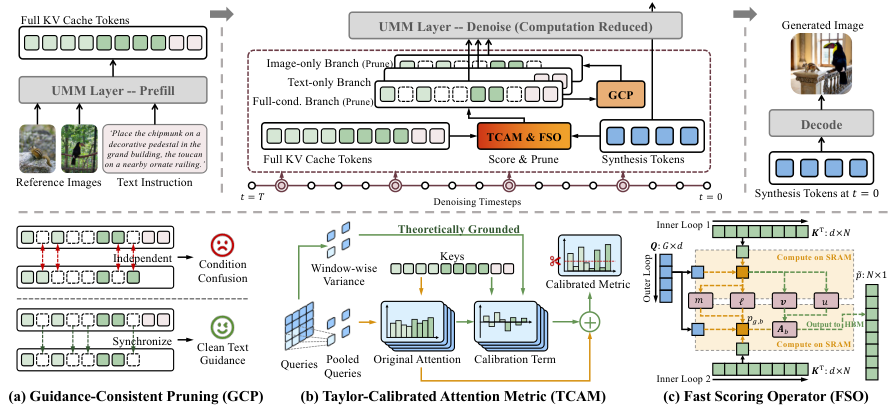
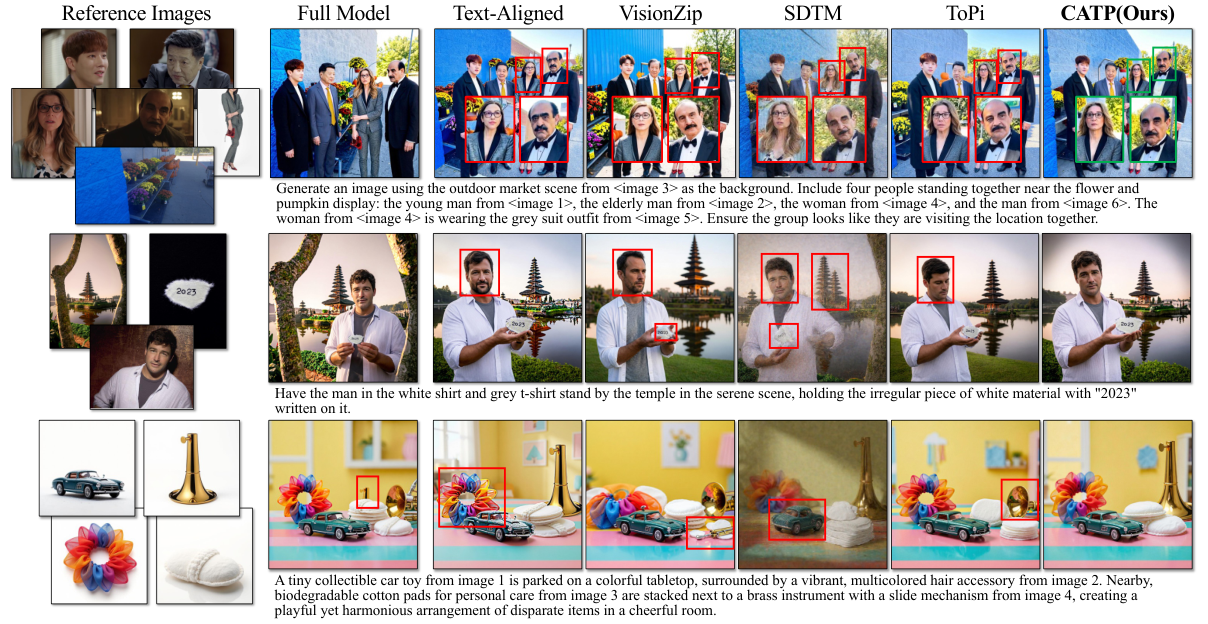
Calibrating Attention-Based Token Pruning for Efficient Multi-Image Synthesis in UMMs
arXiv 2026
arXiv
A training-free token pruning framework that calibrates attention scores and synchronizes pruning across conditioning branches for efficient multi-image synthesis in unified multimodal models, achieving up to 2.09× attention-core speedup. |

|
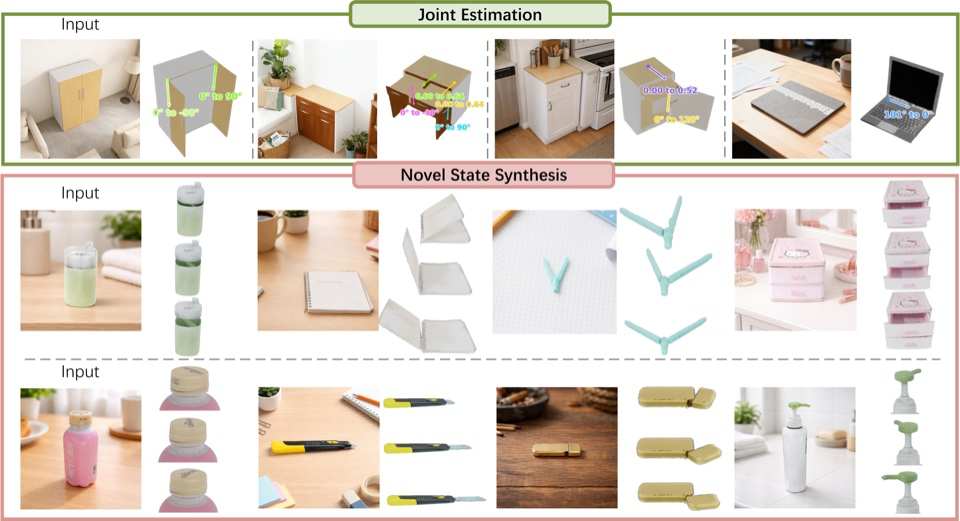
DailyArt: Discovering Articulation from Single Static Images via Latent Dynamics
arXiv 2026
project page /
arXiv
A framework that reveals hidden articulation cues by synthesizing an opened state from a single static image, enabling joint estimation and part-level novel state synthesis. |

|
Generalized Category Discovery in Semantic Segmentation
arXiv 2023
arXiv
A new task setting, Generalized Category Discovery in Semantic Segmentation (GCDSS), aims to discover and segment base and novel categories using labeled base-class data. |
|
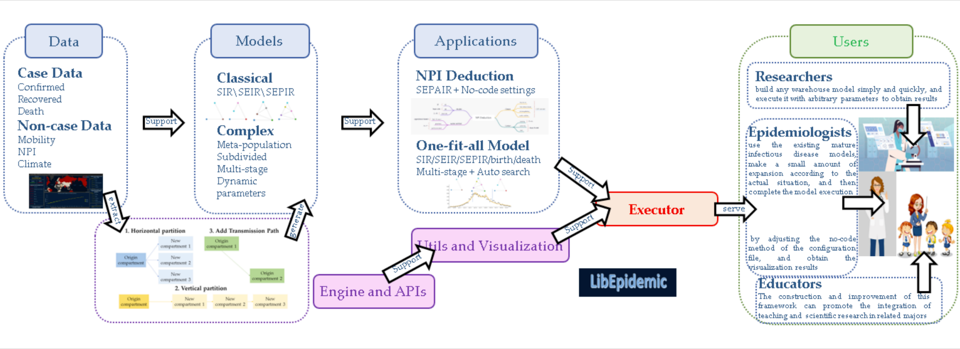
LibEpidemic: An Open-source Framework for Modeling Infectious Disease with Bigdata
CIKM 2022
An open-source framework for infectious disease modeling with big data, enabling researchers to build subdivided, multi-stage and metapopulation models without programming. |
|
This homepage's source code is from Jon Barron's website. |